
AI in Medicine - curated summaries making complex issues easy to understand
AI in Medicine - Smart SummariesWelcome to AI in Medicine - Smart Summaries, the podcast that brings cutting-edge advancements in artificial intelligence and medical research straight to your ears. In a rapidly evolving field where technology meets healthcare, staying updated can feel overwhelming. Our mission is to make complex topics accessible, engaging, and actionable for healthcare professionals, AI enthusiasts, researchers, and curious minds alike.What You Can ExpectEvery week, we delve into groundbreaking medical research, transformative AI applications.
Latest Episodes
Who Catches Cancer Patients in Crisis? AI Chatbots, Distress, and the Safety Gap
In this episode, we unpack a 2026 scoping review examining conversational AI agents used for psychological support in cancer care. We explore the massive gap between testing AI for user experience and actually equipping it to handle clinical distress. Listeners will learn why fewer than a fifth of these projects formally evaluate safety, and what that means for developers and oncology teams building psycho-oncology tools. Key points An umbrella review cited in the document found pooled prevalenc…
Company Spotlight: Csd Labs eMurmur Heart AI - 90.0% Accuracy in Automated Murmur Detection
We unpack the public FDA 510(k) summary for eMurmur Heart AI (2.2), a software system designed to analyze patient heart sounds and detect abnormal murmurs. We break down the clinical performance data, the software's transition to supporting multiple digital stethoscopes, and how the company's Predetermined Change Control Plan allows for future hardware updates. Key points eMurmur Heart AI (2.2) is cleared as a decision support system for evaluating recorded patient heart sounds in pediatric and …
Who Gets Sued When an AI Scribe Hallucinates? The Hidden Liability of Automated Medical Notes
AI scribes are rapidly entering hospitals to save clinicians from documentation burnout, but who is legally responsible when the software hallucinates a diagnosis or drops a critical negation? This episode unpacks a PLOS Digital Health analysis of 74 official regulatory documents governing AI scribes. We explore the drafting fiction that shifts liability onto doctors, the biometric privacy risks of voice data, and why hospital leaders must rethink protected review time before deploying ambient t…
Company Spotlight: Ever Fortune.AI ETT-XR-100 - AI Triage for Misplaced Endotracheal Tubes
This episode unpacks the FDA 510(k) clearance summary for Ever Fortune.AI's EFAI ETTXR system, an AI tool designed to flag malpositioned endotracheal tubes on adult chest X-rays. We break down the clinical testing data, the algorithm's specific measurement thresholds, and crucial limitations regarding esophageal intubation and double lumen tubes. Key points The EFAI ETTXR is a radiological triage software that analyzes adult chest X-rays to flag suspected vertically malpositioned endotracheal tu…
Company Spotlight: Us2.ai Us2.ca - AI Detection for Cardiac Amyloidosis
We unpack the FDA 510(k) summary for Us2.ca, an AI software device by Us2.ai designed to detect cardiac amyloidosis from echocardiograms. We break down the clinical testing data, demographic performance differences, and key limitations hospital buyers need to know. Key points Us2.ca is cleared via the FDA 510(k) pathway as substantially equivalent to the predicate device, EchoGo Cardiac Amyloidosis 1.0.The software is indicated for adult patients with a specific left ventricular wall thickness o…
When Clinical AI Acts on Its Own: Building Defensible Agents in Healthcare
AI in healthcare is shifting from making predictions to taking autonomous actions. This document from IQVIA outlines how health systems and pharma companies must update their validation pipelines to ensure AI agents are defensible, auditable, and safe. Key points The software landscape has entered the agentic era, where AI no longer just drafts code or predicts outcomes, but actively takes actions like querying databases and updating records.Regulators have shifted their stance in just 24 months…
Company Spotlight: DigestAID Deep Capsule - Sifting Millions of Frames for GI Bleeds
DigestAID recently secured FDA 510(k) clearance for Deep Capsule, an AI tool designed to help gastroenterologists review capsule endoscopy footage for small bowel bleeding. Maya and Sam unpack the clearance summary to explore the algorithm's performance data, its substantial equivalence to a predicate device, and the real-world trade-offs between high sensitivity and low specificity when reviewing millions of video frames. Key points Deep Capsule is an AI software that acts as a computer-aided d…
Why Do Imaging Algorithms Stall? Deskilling, Friction, and AI's Workforce Problem
Health systems are eager to deploy diagnostic AI to boost speed and accuracy, but a new systematic review reveals a massive blind spot: human adaptation. We unpack why high-performing algorithms face workforce resistance, exploring fears of deskilling, loss of autonomy, and mental strain. Discover what the evidence says about building a sustainable, AI-equipped clinical team. Key points A systematic review of 69 peer-reviewed articles found that while 54% of studies show AI improves reading time…
Why One-Time Bias Checks Fail: Building Continuous AI Audit Pipelines in Healthcare
This episode unpacks a scoping review on operationalizing fair AI in healthcare, focusing on why static pre-deployment bias checks are no longer enough. Maya and Sam explore the transition to continuous monitoring, detailing specific bias mitigation strategies, the complexities of regulatory compliance, and the exact tools organizations are using to build ongoing algorithmic audit pipelines. Key points AI Act certification compliance is estimated to cost between 10 to 14% of development costs, h…
Company Spotlight: Butterfly Network Gestational Age Tool - AI Prenatal Biometry
We unpack the FDA 510(k) summary for the Butterfly Gestational Age Tool, an AI software that estimates gestational age from blind ultrasound sweeps. We explore the clinical trial data, the limits of agreement across different pregnancy windows, and the specific labeling that restricts its use in delivery planning. Key points The Butterfly Gestational Age Tool uses a deep-learning model to estimate gestational age from blind ultrasound sweeps without requiring the user to rely on a live B-mode im…
Company Spotlight: iSchemaview Rapid MLS - Automating Brain Midline Shift on CT
We review the FDA 510(k) summary for iSchemaview's Rapid MLS, an AI software designed to measure brain midline shift from non-contrast CT scans. The episode unpacks the algorithm's performance against human experts, its clinical indications for intracranial hemorrhage and TBI, and the regulatory strategy of claiming substantial equivalence to a heart measurement tool. Key points Rapid MLS uses AI/ML to measure brain midline shift on non-contrast CTs, providing a color overlay and quantitative JS…
The RCT Reality Check: Does Healthcare AI Actually Improve Patient Outcomes?
This episode unpacks a major systematic review of 54 randomized controlled trials evaluating AI in real-world clinical settings. We explore which types of AI actually improve patient outcomes and why passive workflow alerts often fail. Listeners will learn what the latest data means for clinicians building care pathways and executives deciding which digital health tools to buy. Key points Out of 54 real-world RCTs, 40 studies (74.1%) reported a positive direction of effect on their primary endpo…
Company Spotlight: Qure.ai qXR-Detect - Triage on routine chest X-rays
This episode examines the FDA 510(k) clearance summary for Qure.ai's qXR-Detect, a computer-assisted detection tool for chest X-rays. We explore its clinical performance data, how it impacts reader sensitivity and false positive rates, and a unique regulatory plan that allows future algorithm architecture changes. Key points qXR-Detect is cleared as a concurrent reading aid to highlight suspicious regions on adult chest X-rays across 6 categories.In a clinical study with 18 readers, the software…
NICE's New AI Rulebook: Validating AI-Generated Evidence for Healthcare
NICE has released a comprehensive framework detailing exactly how pharmaceutical and medtech companies must validate AI tools used to generate evidence for healthcare evaluations. Maya and Sam unpack the strict new rules on automation, human oversight, and performance metrics. Listeners will learn what is acceptable, what is banned, and how to avoid critical methodological pitfalls when using AI in evidence synthesis. Key points NICE has established 4 types of principles for using AI in evidence…
Company Spotlight: Pathwai EchoNext - Finding Structural Heart Disease on a Routine ECG
This episode examines the FDA 510(k) clearance summary for Pathwai's EchoNext, a software tool that analyzes standard 12-lead ECGs to flag suspected structural heart disease. We unpack the performance metrics from a 102,219-patient validation dataset, detailing its sensitivity, specificity, and six clinical sub-labels. Listeners will learn how this notification software functions, its limitations, and what it means for clinical workflows. Key points EchoNext uses a deep neural network to analyze…
Who Controls AI Adoption? The WHO on Generative AI and Health System Divides
The WHO's Western Pacific Regional Office just issued draft guidance on responsible AI in health. Maya and Sam unpack their framework for prioritizing use cases, managing implementation risk in resource-constrained settings, and why ministries of health must fund the ecosystem, not just the technology. Key points Generative AI has shifted the technology from specific problem-solving to general-purpose health system support, making governance more urgent.Implementation risk is determined by where…
Company Spotlight: DeepHealth ProstateAI - Standardizing Prostate MRI Detection
This episode unpacks the FDA 510(k) summary for DeepHealth ProstateAI, a radiological software device developed by Quantib BV. We explore how the deep learning tool assists physicians in detecting and characterizing prostate cancer lesions, examine its performance metrics in a multi-reader study, and discuss the clinical implications of its specific workflow requirements. Key points DeepHealth ProstateAI is cleared as a concurrent reading aid for physicians assessing bi-parametric prostate MRIs …
Why Smart MedTech Stalls in Procurement: Solving the Hospital Data Bottleneck
We unpack a 2026 Accenture report on why intelligent medical devices are struggling to scale across healthcare systems. We explore the massive disconnect between medtech's data needs and hospital IT realities, and detail the exact operational roadmap both sides need to turn fragmented data into real clinical value. Key points 97% of provider executives say privacy and security concerns are the primary barrier to sharing health data with medtech companies.Despite the push for interoperability, 73…
Company Spotlight: Milvue TechCare Trauma - Boosting Fracture Detection by 21.8%
We unpack the FDA's 510(k) summary for Milvue's TechCare Trauma, an AI tool cleared to detect fractures and elbow joint effusions on plain X-rays. Listeners will learn how the software performs across age groups, how its high-sensitivity and high-specificity operating points work, and the results of retrospective clinical studies showing significant jumps in diagnostic sensitivity. Key points TechCare Trauma is a Class II radiological computer-assisted detection software cleared to identify frac…
Will Nurses Trust the AI? Bedside Realities and the 40% Time Savings Promise
Health systems are rushing to deploy AI tools that promise massive efficiency gains, but what happens when bedside nurses push back? This episode unpacks a comprehensive qualitative review of how frontline nurses actually experience generative AI, detailing their deep concerns about professional identity, legal liability, and the erosion of humanistic care. Key points A multicenter trial across 3 hospitals and a separate 40-nurse study show generative AI can reduce nursing documentation time by …
Podcasts

Child Loss & Grief Support for Moms | Coping after the Death of a Child | Hope & Healing for Grieving Mothers | Grief | Loss of a Child | Grief Support
Lisa K. Boehm - Child Loss & Grief Educator, Bereaved Mother

روانشناسی دکتر هلاکویی
Holakuee
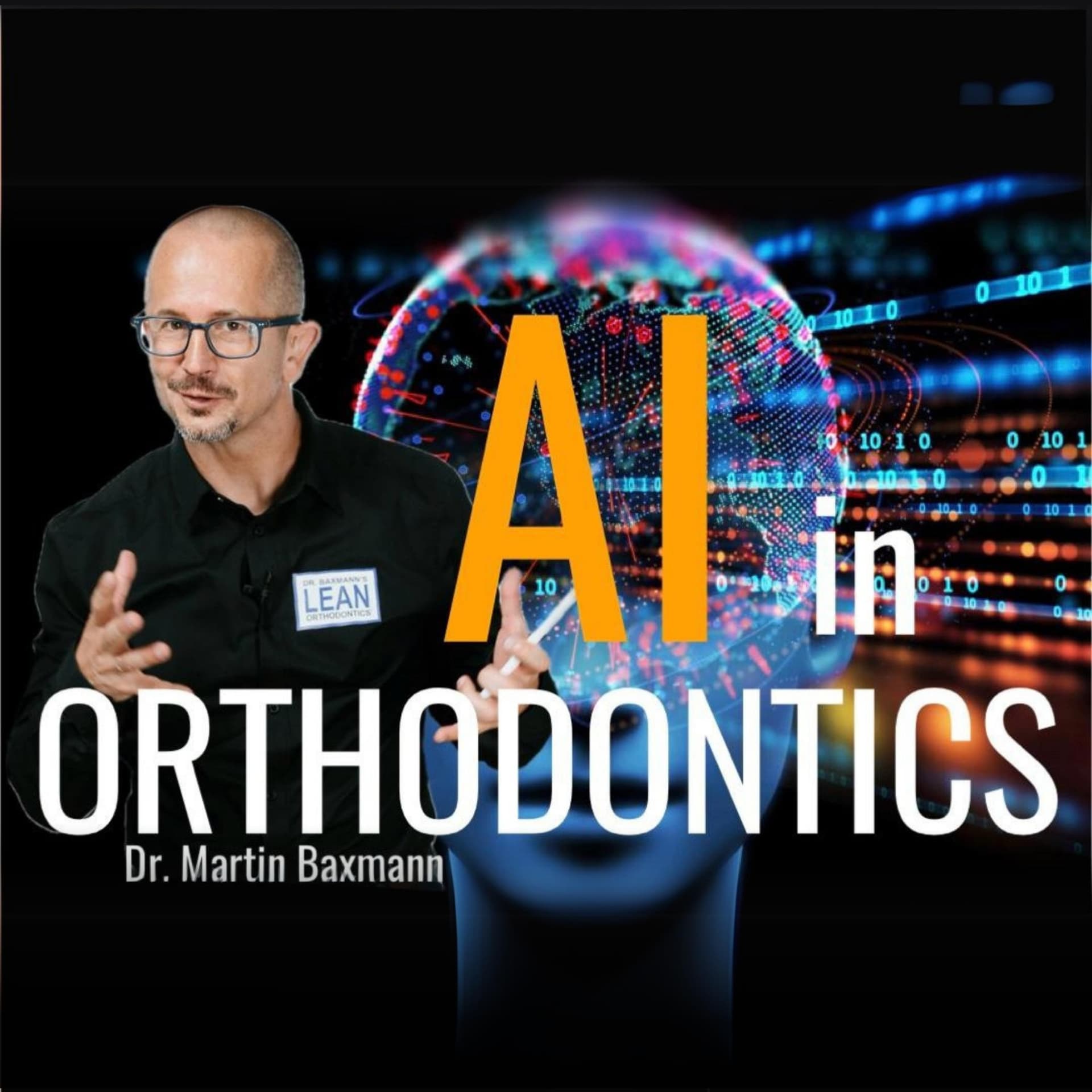
AI in Orthodontics - Artificial meets Expert Intelligence
Dr Martin Baxmann

Cancer Has No Borders
BeOne Medicines

Mantra with Jemma Sbeg
OpenMind

Sustained Courage
Rachel Caruso-Novack
