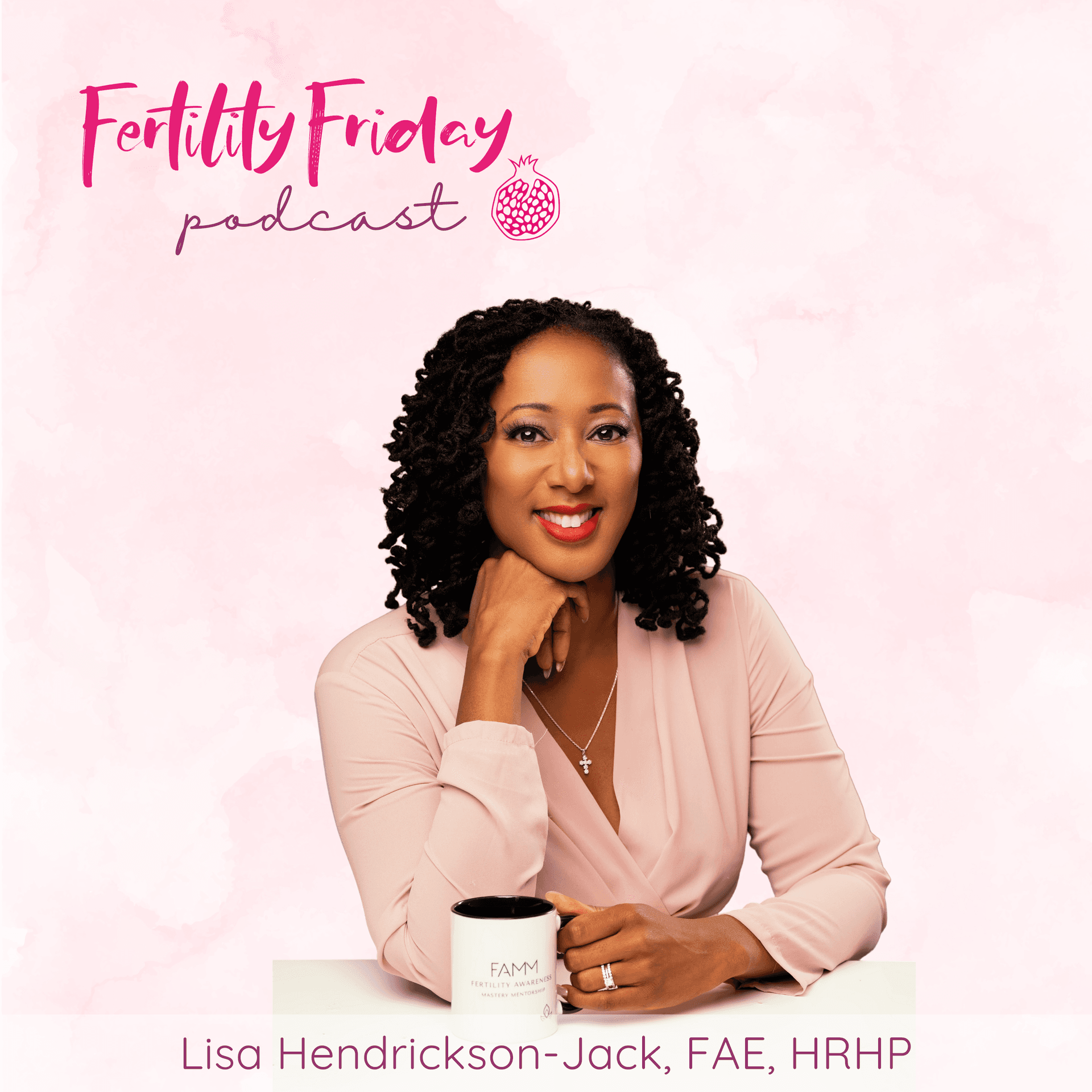
Fertility Friday | Fertility Awareness Mastery for Women's Health Professionals
Are you ready to uplevel your women's health practice? Welcome to the Fertility Friday Podcast! A podcast designed to empower you to use fertility awareness both personally and professionally. If you are a woman's health professional — and you're not fully utilizing the menstrual cycle as a vital sign — it's time to change that right away!Through evidence-based literature reviews, engaging discussions, expert interviews, and compelling client stories, Lisa Hendrickson-Jack, FAE, HRHP covers everything from complex menstrual cycle chart interpretation and balancing hormones to overcoming fertility challenges and more. With over 20 years of experience teaching fertility awareness, Lisa combines her real-world expertise with the latest research to ensure you're fully equipped to support your clients. Lisa's first book, "The Fifth Vital Sign," describes the menstrual cycle as an important vital sign we should pay attention to. Her most recent book, "Real Food for Fertility" (co-authored
Latest Episodes
Can You Really Meditate Away Your Period Problems?
In episode 653, Lisa speaks with Afsaneh Maza, an abortion doula, fertility awareness educator, and FAMM practitioner in training, about how spiritual approaches to menstrual health and science-based cycle charting can work together. Afsaneh shares how unplanned pregnancies led her to the symptothermal method, and how her chart revealed a short luteal phase that months of emotional and spiritual work had not changed. Lisa discusses why she grounds her approach to fertility awareness in research …
Top 5 Reasons to Teach your Clients to Chart their Cycles
In this episode of the Fertility Friday Podcast, Lisa Hendrickson-Jack shares five research-informed reasons why women's health professionals should teach clients to chart their cycles. She discusses the gap in fertility awareness training among health providers, why most women use cycle tracking apps only to log their periods, and data showing that only 13% of more than 600,000 cycles were 28 days long. Lisa also reviews research linking fertility sign tracking with higher odds of conception, a…
Uh oh, Women Are Talking About Birth Control on Instagram Again
In this episode, Lisa discusses a recent study that analyzed over 30,000 German-language Instagram posts about birth control and found that posts about the pill focused largely on side effects, while posts about natural family planning tended to be positive. She explores why the side effects women shared online were consistent with the research, why fertility awareness was the second most discussed method, and what it means that the researchers acknowledged the effectiveness of the properly taug…
Which Supplements Actually Improve Sperm Quality?
In this episode, Lisa reviews a recent meta-analysis of 18 trials involving nearly 2,000 men with abnormal semen analysis, which ranked eight antioxidants by their effects on sperm parameters. She explains why CoQ10 stood out for sperm concentration, why carnitine was associated with the largest gains in motility, and what it may mean that the other antioxidants studied did not outperform placebo. Lisa also discusses the limits of relying on supplements alone and the role of a nutrient-dense die…
How Much Do Practitioners Really Know About Fertility Awareness?
In episode 649, Lisa examines research on how much physicians, midwives, and other women's health professionals actually know about fertility awareness. Drawing on several studies, she explains why many practitioners scored no better than their patients on basic fertility knowledge, why most physicians recommended calendar-based timing over cervical mucus observation, and why fewer than 6% knew the perfect use effectiveness of modern fertility awareness-based methods. Lisa frames fertility aware…
Is Progesterone Testing Always Accurate?
In this solo episode, Lisa explores what a progesterone blood draw can and cannot reveal about the luteal phase. Drawing on two studies, she explains why mid to late luteal progesterone levels can vary widely within minutes, why some women who have ovulated may still test low, and why the common cycle day 21 test often misses the mark. Lisa makes the case that progesterone results may be most meaningful when interpreted alongside daily cycle charting data such as basal body temperature and cervi…
Top 4 Reasons to Eat Liver for Fertility
In this solo episode, Lisa explores four research-based reasons to consider liver for fertility. She explains the role of vitamin A in egg development, discusses a study in which organ meat intake was associated with higher sperm count, concentration, and motility, and covers why folate, choline, and iron matter before conception. Lisa also emphasizes the importance of relying on evidence-based resources when it comes to preconception nutrition. Follow this link to view the full show notes page!…
Is Ovulation The Fifth Vital Sign?
In this solo episode, Lisa explores why the menstrual cycle, and ovulation in particular, may be considered a fifth vital sign. She discusses the 2006 ACOG statement on evaluating the cycle as a vital sign in adolescents, the research linking cycle irregularities to concerns such as bone loss and type 2 diabetes risk, and why suppressing ovulation with hormonal contraceptives does not address underlying cycle issues. Lisa also explains how fertility awareness charting can offer real-time insight…
Does The Depo Shot Impact Fertility?
Is the Depo shot associated with a delay in the return of fertility? In this solo episode, Lisa reviews a recent study comparing how long ovulation takes to return after stopping intramuscular and subcutaneous Depo injections, and why the average of six to seven months places the Depo shot on the longer end of hormonal birth control options. She also explains the difference between the return of ovulation and time to pregnancy, and how cycle charting may help clients and practitioners recognize …
Does The Pill Lower Ovarian Reserve?
Does the pill lower ovarian reserve? In this episode, Lisa examines a recent clinical commentary on how hormonal contraceptives suppress AMH and antral follicle count (AFC), and why ovarian reserve testing can be misleading for women who have recently stopped birth control. She discusses the 6 to 12 month recovery timeline, the well-documented period of post-pill subfertility, and why these markers are better predictors of IVF response than natural fertility. Lisa also shares two case studies th…
The Problem With the Day 21 Progesterone Test
Lisa examines why the standard day 21 progesterone test may not accurately reflect luteal phase health — especially when ovulation timing hasn't been confirmed. Drawing on a committee opinion from the American Society for Reproductive Medicine, she explores the limitations of spot testing and why menstrual cycle charting offers practitioners a more reliable framework for identifying and addressing short luteal phases. Follow this link to view the full show notes page! This episode is sponsored b…
Do Perimenopausal Women Really Have Low Estrogen?
Lisa breaks down new research showing perimenopausal estrogen doesn't just decline — nearly half of women in a 1,300-person study saw a significant rise before their final period, linked to symptoms like heavy bleeding, breast tenderness, and headaches. She unpacks what's driving this pattern and why cycle charting is a key tool for understanding and supporting women through this transition. Follow this link to view the full show notes page! This episode is sponsored by Lisa's new book, Real Foo…
Do Your TTC Clients Know When They're Ovulating? | FAMM Research Series
A new study of nearly 98,000 women trying to conceive found that 41% couldn't identify their fertile window — even among those with "regular" cycles. Lisa breaks down what the data reveals about cycle knowledge gaps, and why this matters for anyone trying to conceive or supporting clients who are. Follow this link to view the full show notes page! This episode is sponsored by Lisa's new book, Real Food for Fertility, co-authored with Lily Nichols! Grab your copy here! 🎧 Would you prefer to list…
Pregnant at 40 and Again at 42 | FAMM Practitioner Series | Rachael-Beth Moss
Fertility educator Rachael-Beth Moss shares her journey from painful, unexplained periods to charting her cycle, addressing pregnancy loss, and conceiving naturally at 40 and 42. Follow this link to view the full show notes page! This episode is sponsored by Lisa's new book, Real Food for Fertility, co-authored with Lily Nichols! Grab your copy here! 🎧 Would you prefer to listen to the audiobook version of Real Food for Fertility instead? 🎧 Listen here! 💥This episode is also sponsored by FAMM…
Blindsided by Depo | FAMM Practitioner Series | Carla Lagunas
Carla Lagunas shares her personal journey through hormonal birth control, including her experience with Depo-Provera and prolonged amenorrhea, and how it led her to fertility awareness education. She discusses language barriers in accessing fertility awareness resources and her path toward opening a practice in Costa Rica. Follow this link to view the full show notes page! This episode is sponsored by Lisa's new book, Real Food for Fertility, co-authored with Lily Nichols! Grab your copy here! �…
Sperm DNA Damage and Recurrent Miscarriage
Lisa breaks down a research paper on sperm DNA fragmentation and its link to recurrent first-trimester miscarriage. The study found that most men classified as "normal" under the WHO 2021 semen analysis criteria still had elevated DNA fragmentation, and that double-stranded DNA damage specifically was tied to miscarriage risk. Lisa explains why standard semen analysis may miss this issue, why ICSI doesn't necessarily solve it, and why couples facing unexplained or recurrent loss may benefit from…
Time To Discuss The New WHO Sperm Guidelines
Lisa breaks down the WHO's 2021 update to its semen analysis guidelines — the first revision since 2010. She explains how these reference values are calculated, why the new numbers changed only marginally from 2010, and what this means for interpreting a semen analysis. Lisa also contrasts the WHO's "normal" thresholds with research on optimal ranges for natural conception. Follow this link to view the full show notes page! This episode is sponsored by Lisa's new book Real Food for Fertility, co…
The New PCOS/PMOS Guidelines | What Changed and What's Missing
Lisa reviews the 2023 international PCOS guidelines that preceded the recent PCOS-to-PMOS name change. She covers key updates including AMH testing as an ultrasound alternative, revised hyperandrogenism criteria, mental health screening recommendations, and a shift toward weight-inclusive care. Lisa also highlights a notable gap in the guidelines: the lack of attention to lean PCOS and its impact on diagnosis. Follow this link to view the full show notes page! This episode is sponsored by Lisa's…
New Research: Persistent Organic Pollutants and Ovarian Reserve
New research links persistent organic pollutants to lower ovarian reserve — even when AMH looks normal. Lisa breaks down the study's findings on legacy chemicals, the "cocktail effect," and what this may mean across generations. Follow this link to view the full show notes page! This episode is sponsored by Lisa's new book Real Food for Fertility, co-authored with Lily Nichols! Grab your copy here! Would you prefer to listen to the audiobook version of Real Food for Fertility instead? 🎧 Listen …
Are Everyday Chemicals Disrupting Your Menstrual Cycle?
In this episode, Lisa breaks down findings from a recent review paper on how endocrine disrupting chemicals like BPA, phthalates, PFAS, and PCBs may be linked to menstrual cycle changes, hormone levels, and fertility outcomes. She explores why female fertility remains understudied compared to male fertility, what the research shows about chemical exposure and subfertility, and why swapping to "BPA-free" products isn't the fix it's marketed to be. Lisa offers a practical, non-alarmist approach to…


