
Irregular Warfare Podcast
The Irregular Warfare Podcast explores an important component of war throughout history. Small wars, drone strikes, special operations forces, counterterrorism, proxies—this podcast covers the full range of topics related to irregular war and features in-depth conversations with guests from the military, academia, and the policy community. The podcast is a collaboration between the Modern War Institute at West Point and Princeton University’s Empirical Studies of Conflict Project.
Latest Episodes
From the Gray Zone to War: Preparing Marines for the Future Fight
How can Marines help an ally facing gray-zone coercion at sea today, and what must they be ready to do if deterrence fails and war breaks out? Summary Lieutenant General Jay Bargeron, Carlton Haelig, and Don Edwards join Kyle Atwell to discuss Ground Combat Element 2040, the Marine Corps’ vision for its ground forces. Bargeron recalls taking command of a regiment coming home from Afghanistan and discovering how much work it would take to prepare those same Marines for a different kind of war. Dr…
What's Cyber Good For?
Episode #167 of the Irregular Warfare Podcast grapples with the role cyberspace should play in the broader coercion toolkit. The conversation considers why cyber has remained a go-to tool for shaping adversary behavior even as research has cast doubt on its coercive effectiveness. We explore the practical challenges of signaling credibly in a secretive domain, unpacking what cases like the 2014 Sony Pictures hack and the discovery of Volt Typhoon reveal about cyber coercion in practice. Our gues…
The Airpower We Need for Irregular Warfare
Summary Why does providing aircraft so often fall short of building an effective air force? Retired Lieutenant General Anthony Rock, Michael Horowitz, and Tobias Switzer join Kyle Atwell to examine the gap between acquiring technology and turning it into military power. Drawing on Switzer’s RAND report, Build Partner Airpower, Not Air Forces, the conversation explores what American air advisors learned in Iraq and Afghanistan and what future missions should do differently. The guests discuss the…
War at Arm’s Length: Can Military Assistance Work?
U.S. military assistance often has a bad reputation, but it isn’t doomed to failure. This episode examines why security assistance succeeds with some partners and falls short with others, and what it takes to turn weapons and training into lasting military capability. Lieutenant General (Ret.) Charles Hooper, Dr. Richard Bennet, and Dr. Alexander Noyes are the guests. Today’s episode explores how the United States can build effective military partners, drawing on Richard Bennet and Alexander Noy…
Hidden Costs of Precision
Episode 164 of the Irregular Warfare Podcast grapples with the hidden costs of precision warfare, looking at how drone strikes affect civilian populations well beyond their immediate lethal footprint. Anchored in a study using twelve billion geocoded cell phone records from Yemen, the conversation explores how drone strikes trigger sharp spikes in civilian mobility and communication—disruptions on a scale comparable to major natural disasters—even when no civilians are physically harmed. Our gue…
The Future of War Part IV: Special Operations on a Global Battlefield
This episode of the Irregular Warfare Podcast concludes our four-part Future of War series, pairing author and futurist August Cole with senior special operations leaders to explore how tomorrow’s conflicts may unfold. Today’s episode centers on Operation Lightning, a near-future story by P.W. Singer and August Cole that imagines Army Rangers operating across a truly global battlefield. Set during a large-scale conflict with China in 2039, the story follows a four-person Ranger reconnaissance el…
From Subversion to Resistance: Lessons from Russia’s War in Ukraine
Today’s episode examines how Russian agents and local militants exploited ambiguity, weak state capacity, and fragmented local authority to transform unrest in the Donbas into an armed insurgency in 2014. At its core, it is a story about how a small group of armed actors can seize a city—and how local institutions, political legitimacy, and civil society can stop them. Dr. Celeste Wallander and Dr. Serhiy Kudelia are the guests. Summary Russia’s full-scale invasion of Ukraine began in February 2…
Five Years After the Withdrawal: Insights from the Afghanistan War Commission
Ahead of the fifth anniversary of the American withdrawal from Afghanistan this August, Dr. Colin Jackson and Colonel (Ret.) E.J. Degen join us to discuss initial insights from the Afghanistan War Commission’s work. The Afghanistan War Commission is an independent body established by the U.S. Congress to examine the key strategic, diplomatic, and operational decisions that pertain to the war in Afghanistan from June 2001 to August 2021. In particular, the episode examines what the US war in Afgh…
Innovation Under Fire: What WWII’s Commandos Teach Us About War and the Future of Special Operations
Description Episode 160 examines the origins of Britain’s World War II commandos and the enduring role of special operations forces from Churchill’s era to today. Summary This episode explores the creation of Britain’s legendary commando force following the military disasters of 1940. Author Monty Halls and retired Lieutenant General Scott Howell trace how a remote house in the Scottish Highlands became the laboratory for a new kind of warrior – one selected for grit, initiative, adaptability, a…
From NATO to the Gulf: Allies, Access, and the Hidden Architecture of American Power
Description Episode 159 examines the relationship between alliances, military access, and U.S. global power projection. Summary This episode explores an often overlooked benefit of alliances: wartime access. Dr. Rachel Metz and Ambassador Douglas Lute explain why public debates about allies often focus narrowly on defense spending, while missing the basing, overflight, logistics, intelligence, and political permissions that make U.S. global power possible. The conversation examines how allies an…
The Wars Nuclear Weapons Don't Prevent
Nuclear weapons may make direct war between major powers less likely, but they do not end competition. Instead, they push states toward indirect forms of conflict: proxy warfare, security force assistance, covert action, and cyber operations. The guests discuss why indirect conflict is so attractive in an era of nuclear risk, how this logic applies to Ukraine and Taiwan, and what it means for US-China competition. They also consider whether the United States is adequately preparing for the kinds…
Setting Out to Win: Why America Needs to Get Serious About Irregular Warfare
This episode examines why the United States has failed at irregular warfare and what it would take to reverse that trajectory—not merely to deter, but to actually win. Summary While irregular warfare is on the rise around the globe today, the United States has largely failed at irregular warfare over the past 75 years. Key issues our guests identify include a military oriented for conventional war, inconsistent knowledge and education about irregular warfare, as well as the lack of a dedicated U…
Iran, Ukraine, and the Future of Naval Warfare
Description Episode 156 examines what the U.S.-Iran War and Russia-Ukraine War reveal about how weaker states and irregular actors contest navies, maritime commerce, and global energy flows. Summary This conversation examines naval irregular warfare in an era of drones, shadow fleets, contested chokepoints, and attacks on commercial shipping. The guests explore why the maritime domain is attractive to weaker states and irregular actors, comparing Iran’s approach in the Strait of Hormuz, Ukraine’…
Hellscape Taiwan: Drones, Deterrence, and the Future of Asymmetric Defense
This week’s episode of the Irregular Warfare Podcast examines how Taiwan could deter—or potentially defeat—a Chinese invasion by transforming the Taiwan Strait into an “unmanned hellscape.” Anchored in the recent CNAS report Hellscape for Taiwan: Rethinking Asymmetric Defense, the conversation explores how drones, autonomous systems, and mobile defenses are reshaping warfare in the Indo-Pacific. Drawing from lessons in Ukraine, the guests argue that cheap, expendable drones offer Taiwan a way to…
The Counterinsurgency Dilemma: Foreign Fighter Influence on Insurgencies in Afghanistan and Somalia
Episode 154 of the Irregular Warfare Podcast examines a core puzzle in intrastate conflict: how a small number of foreign fighters can exert outsized influence on insurgencies. Anchored in Professor Tricia Bacon’s The Counterinsurgency Dilemma, this episode explores when foreign fighters strengthen insurgent groups—and when they undermine them. While foreign fighters are often associated with higher levels of violence, they typically make up only a small share of insurgent forces. As Bacon argue…
Where the Lion Can’t Reach: Unconventional Warfare in Major War
Description Episode 153 examines the role of unconventional warfare and special operations forces in conventional major war. Summary This conversation explores how unconventional warfare can support, shape, and sometimes substitute for conventional military operations in large-scale combat. Our guests examine what unconventional warfare is, why it matters beyond the special operations community, and how support to resistance forces can create strategic and operational effects for joint force com…
What the Hell is Irregular Warfare Anyway?
Episode 152 of the Irregular Warfare Podcast grapples with the many definitions of irregular warfare used across the community of interest. In this episode, our guests discuss why the concept of irregular warfare has resisted a stable definition across decades of changing doctrine, and what that persistent confusion has cost operationally and strategically. We walk through three competing definitional approaches— the maximal, the traditional, and the competition-disruption model — weighing the s…
Chokepoints: American Power in the Age of Economic Warfare
Episode 151 of the Irregular Warfare Podcast explores how the United States wields power not only through military force, but through dollars, sanctions, export controls, and supply chains. Anchored in Eddie Fishman’s book Chokepoints: American Power in the Age of Economic Warfare, this episode examines the rise of economic statecraft as a central feature of great power competition. Drawing on the firsthand experiences of former Treasury Secretary Jack Lew and former Deputy National Security Adv…
From Orbit to Objective: Space and the Future of Conflict
Space is no longer a silent backdrop to conflict—it is a contested domain that enables, shapes, and increasingly defines how wars are fought. In this episode, Ben Jebb and Charlie McGillis sit down with Dr. James Kiras and General Stephen Whiting to examine the strategic importance of space in both great power competition and irregular warfare. The discussion explores how modern military operations rely on space-based capabilities for precision, synchronization, intelligence, and global reach—an…
Iran, Revolution, and the Logic of Proxy Warfare
Episode 150 of the Irregular Warfare Podcast examines the historical and strategic forces that shaped modern Iran and explores how the Islamic Republic uses irregular warfare to advance its interests in the Middle East. Our guests begin by examining the political foundations of modern Iranian politics, tracing the country’s trajectory from the rule of the Shah and the 1953 coup against Prime Minister Mohammad Mossadegh to the revolutionary upheaval of 1979. They then explore why the Islamic Repu…
Podcasts
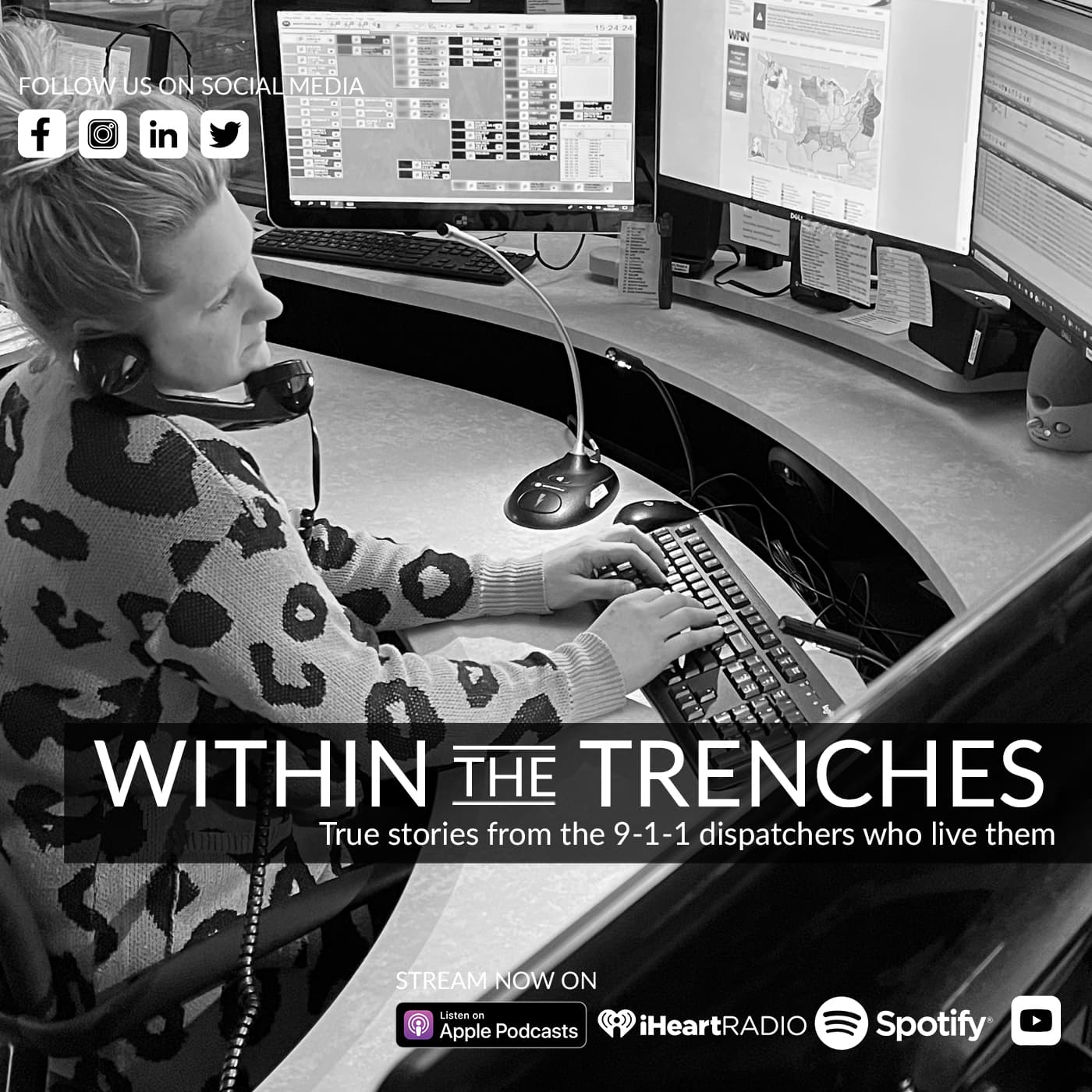
Within the Trenches
Code 7 Podcast Network

Show Archives – Armed American Radio |
Armed American Radio

The Proceedings Podcast
U.S. Naval Institute

The Michigan DNR's Wildtalk Podcast
Michigan Department of Natural Resources Wildlife Division

The Lawfare Podcast
The Lawfare Institute

The DSR Network
The DSR Network
